First, let's kill the thing everyone tells you
Almost every China budget guide opens the same way. China is cheap. Much cheaper than Japan, much cheaper than Korea. That was true for a long time. In 2026 it is no longer reliably true, and I say that as someone who lives here and travels here constantly.
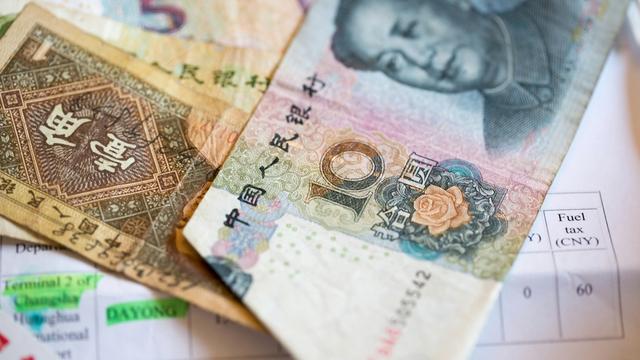
Two things happened. The yuan strengthened — a year ago a dollar bought you about ¥7.21, today it buys about ¥6.77. That's roughly 6% less China for the same dollar, before anything actually got more expensive. And domestic prices did not fall to compensate.
The clearest evidence isn't a statistic, it's behaviour. A lot of Chinese people have quietly stopped taking domestic holidays and started flying to Japan instead, because once they land, the food and the shopping are cheaper than at home. When locals vote with their feet like that, the "China is cheap" line needs revisiting.
China is still meaningfully cheaper than travelling in the United States or Western Europe. That part holds, and it holds by a wide margin. But "cheaper than the US" and "cheap" are not the same sentence, and the gap between them is where most travellers blow their budget.
Here is my own baseline, so you know what you're calibrating against. When I travel domestically — Sichuan, Heilongjiang, that kind of trip — I spend about ¥1,000 ($148) a day. I don't shop. That figure is a rental car, fuel, a ¥200 hotel room, cheap fast food, and entrance tickets. Nothing else. Five days runs ¥5,000–6,000 without trying. If you want nicer hotels and a fuller itinerary, ¥10,000 for five days is entirely normal.
Why flights are priced separately here
Every other guide folds international airfare into one headline number, which is how you get articles claiming a China trip costs anywhere between $800 and $5,000. Both are true. Neither is useful.
Someone flying from Sydney and someone flying from New York are not having the same financial experience. So this guide splits into what it costs to get to China and what it costs to be in China. Add the two together yourself.
PART 1 — GETTING THERE
Flights to China
I'm deliberately not quoting live fares. Any number I print today is wrong in three months, and a guide full of stale prices is worse than one with none. What follows are typical economy round-trip ranges over the past few years — use them to calibrate expectations, then check an actual booking site.
| From | Typical economy round trip | Notes |
|---|---|---|
| North America (US/Canada) | $800–1,500 | West Coast consistently cheaper than East Coast |
| Europe | $600–1,200 | Often the cheapest long-haul market to China |
| Australia / New Zealand | $700–1,300 | Shorter flight, but a thinner route network |
A stopover — usually Hong Kong, Seoul, Tokyo, Singapore or a Gulf hub — typically saves $300–400 off a direct fare. Whether that's worth eight extra hours is your call, but if you're already considering it, read the 240-hour transit section below first. It may pay for itself twice.
Beijing, Shanghai and Guangzhou are almost always your cheapest entry points. Flying directly into a second-tier city like Chengdu or Xi'an from overseas usually costs more than flying into Shanghai and taking a domestic connection or a high-speed train.
The seasonality curve
This is more predictable than the absolute prices, and more useful:
- Cheapest: December through March, excluding Chinese New Year. Winter fares run roughly 40% below summer.
- Most expensive: June through August. Peak international demand collides with Chinese school holidays.
- Best compromise: late March to May, and September to early October — but stay clear of the May and October holiday weeks, which I'll cover in detail.
One warning about winter: "cheapest" includes the Chinese New Year period, and that is the single worst time to be inside China as a tourist. A cheap flight into a country where you cannot book a train ticket is not a bargain.
The visa
If you hold a European, British, Canadian, Australian, Japanese, or most other developed-country passports, there is a good chance you don't need one at all. If you're American, you do.
| Passport | Status in 2026 | Cost |
|---|---|---|
| US | Visa required | $140 flat (single, double, or 10-year multi-entry) |
| UK | 30-day visa-free | Free |
| Canada | 30-day visa-free | Free |
| Australia | 30-day visa-free | Free |
| Japan | 30-day visa-free | Free |
| Most EU countries | 30-day visa-free | Free |
| Singapore, Malaysia, UAE | 30-day visa-free | Free |
Roughly 50 countries are on China's unilateral 30-day visa-free list. The United States is the conspicuous holdout among major developed economies, and there's no public indication that's changing soon.
Two things Americans should know. First, the $140 fee is a reduced rate that runs through 31 December 2026, and the 10-year multi-entry visa costs exactly the same as a single-entry one. Get the 10-year. There is no reason not to. Second, that $140 is the consular fee. If you apply through a visa application service centre rather than in person, expect $217–252 all in, plus $25 if you want express processing. Budget $250, not $140.
Allow one to three weeks from starting the application to holding the visa.
The visa-free list is renewed annually and expires at the end of 2026. Check your own nationality before you book anything — I keep a visa checker updated for exactly this reason.
The 240-hour transit rule, used as a budget strategy
Every guide mentions this. None of them treat it as what it actually is, which is a lever for taking a fixed cost to zero.
Citizens of 55 countries — including the United States — can enter mainland China without a visa for up to 240 hours, or 10 days, provided they are continuing on to a third country or region, not returning to where they came from. The policy now covers 65 ports of entry across 24 provinces, and since the 2025 update you can cross provincial borders freely within your 240 hours rather than being confined to your entry region.
So if you're American and your trip is ten days or shorter, restructuring it as New York → Shanghai → Tokyo → New York instead of New York → Shanghai → New York saves you the entire visa cost. Tokyo or Seoul is often a cheap add-on leg anyway. That's $140 to $250 back in your pocket for a routing change.
The catches: you must enter and exit through designated ports, your onward ticket must genuinely go somewhere else, and you have to register your accommodation with local police within 24 hours — which your hotel does for you automatically. Hong Kong and Macau count as third regions.
PART 2 — WHERE YOU SLEEP
This is the part of your budget that can double without warning, and it's the reason this guide exists.
Baseline hotel prices, and why city tiers matter less than you think
Everyone assumes Shanghai and Beijing will destroy their accommodation budget while small cities will be cheap. The reality is flatter than that. The same standard of room might be ¥400 in Shanghai and ¥200 in Chongqing — a factor of two, not a factor of ten.
Normal, non-holiday ranges look roughly like this:
| Type | Per night (CNY) | Per night (USD) |
|---|---|---|
| Hostel dorm bed | ¥50–80 | $7–12 |
| Budget hotel / chain business hotel | ¥150–400 | $22–59 |
| Mid-range (3–4 star) | ¥350–800 | $52–118 |
| Upper mid / 5-star, second-tier city | ¥600–1,200 | $89–177 |
Big cities are, counterintuitively, the safe choice. They have enormous hotel inventory. Prices move modestly during holidays and rooms almost never sell out entirely. During Chinese New Year, tier-1 city hotels frequently get cheaper — everyone who lives there has gone home to somewhere else — and in 2026 some Shanghai rates fell by around half.
The danger is not the big city. The danger is the beautiful place that isn't a city.
The holiday calendar that will wreck your budget
China's holidays are compressed into a handful of fixed windows, and essentially the entire country travels during them simultaneously. There is no staggered school-holiday system to spread the load. This single fact explains most of what's strange about pricing here.
The 2026 dates
| Holiday | Dates | Length | Makeup workdays |
|---|---|---|---|
| New Year's Day | 1–3 January | 3 days | Sun 4 Jan |
| Spring Festival (Chinese New Year) | 15–23 February | 9 days | Sat 14 Feb, Sat 28 Feb |
| Qingming (Tomb-Sweeping) | 4–6 April | 3 days | none |
| Labour Day | 1–5 May | 5 days | Sat 9 May |
| Dragon Boat Festival | 19–21 June | 3 days | none |
| Mid-Autumn Festival | 25–27 September | 3 days | none |
| National Day | 1–7 October | 7 days | Sun 20 Sep, Sat 10 Oct |
How much should you trust this table for 2027? More than you might assume — use it as a planning window, not a legal document.
The four solar-calendar holidays barely move. National Day is 1–7 October essentially every year. Labour Day is anchored to 1 May. Qingming lands on 4 or 5 April. New Year's Day is New Year's Day. For those, this table is good for any year, give or take a day at the edges where the government shuffles things to make a longer weekend.
The lunar holidays move, and Spring Festival moves a lot: 17 February in 2026, 6 February in 2027. The 2026 nine-day block was also unusually generous — seven days is the normal length. Mid-Autumn and Dragon Boat shift by a few weeks year to year for the same reason.
The State Council publishes the exact schedule for the following year around November. Check it before you lock in dates. But you don't need to wait for it to plan: if your trip lands anywhere near one of these blocks, that's your signal to book early, and being a day or two out doesn't change that advice at all.
One quirk worth planning around: in 2026 there are only three working days between Mid-Autumn and National Day. Anyone taking three days off gets a 13-day break from 25 September to 7 October. Plenty of people will. Treat that entire stretch as peak.
Why the makeup workdays matter
Chinese public holidays are partly borrowed, not given. To get seven days off in October, people work the preceding or following weekend — the system is called 调休 (tiáoxiū), "adjusted rest."
For a visitor this has one practical consequence, and it's an important one. Because people have paid for the holiday with a run of twelve or thirteen consecutive workdays, demand on day one is explosive. Nobody wastes it. This is why 1 October and the day before it are the most brutally expensive dates in the Chinese calendar, and why departing on 3 or 4 October instead can save you 30% or more.
It also means a random Saturday might be a working day nationwide. If you're relying on an office, a bank, or a consulate, check.
Why no single number describes this
Read enough China guides and you'll see the same claim: hotel prices go up two to three times during holidays. That number isn't invented. It's just an average across a country where the real range runs from falling to twenty-fold, which makes it useless for deciding anything.
Here's what the 2026 Spring Festival actually looked like, from Chinese press reporting at the time:
| Property | Normal rate | Spring Festival 2026 | Multiple |
|---|---|---|---|
| Shantou, budget hotel | ¥94–119 | up to ¥2,450 | ~20× |
| Shantou, mid-range (Atour) | ~¥580 | ¥3,577 | ~6× |
| Chaozhou, mid-range (Vienna) | ¥278–613 | ¥1,899 | ~7× |
| Jieyang, mid-range (Ji Hotel) | ¥302–458 | ¥1,494 | ~5× |
| Xishuangbanna, one budget chain | ¥98 | ¥963 | ~10× |
| Xishuangbanna, across 9 properties surveyed | — | — | ~4× typical |
| Sanya | — | — | 2–3× |
| Shanghai and other tier-1 cities | — | — | *fell* |
Three things to take from that table.
The cheaper the hotel, the bigger the multiple. A ¥94 room going to ¥2,450 makes the headline, but a ¥580 room going to ¥3,577 is the same market doing the same thing from a higher base. If you were planning to stay in budget places, you're the most exposed, because the bottom of the market doesn't just get expensive — it stops existing.
Mature destinations are safer than newly viral ones. Sanya has been a mass-market resort city for twenty years and has the room inventory to match, so it moves 2–3×. Chaoshan and Xishuangbanna went viral recently and have nowhere near enough beds. Same holiday, completely different outcome. When you're picking where to go during a busy period, ask how long the place has been popular, not how famous it is.
Big cities get cheaper. During that same Spring Festival, tier-1 city hotel rates fell — in some cases by half — because everyone who lives there had gone home to somewhere else. If you must travel during Chinese New Year, the cities are where you want to be.
It also reverses fast. That ¥2,450 Shantou room was back to ¥118 from 25 February, a 95% drop, the moment the holiday ended.
The May holiday showed the same shape. Bookings across the three Chaoshan cities were up more than 180% year on year, a typical property went from ¥249 to ¥1,600, and one listing at ¥8,888 was investigated by the local market regulator. Worth knowing: hotel pricing in China is legally market-determined. Regulators can publish guidance rates and open cases over misleading price displays, but they cannot cap what a hotel charges. Nobody is coming to rescue your budget.
What ¥2,000 a night looks like: Dunhuang, July
I drove into Dunhuang in July, in the middle of the summer peak, and made the mistake of not booking ahead.
By the time I started looking for a room it was dark and I'd been driving too long to keep going. Every normal hotel in town — the ordinary, unremarkable ones — was above ¥2,000 a night. That's around $300. More than I'd pay for the equivalent room in the United States, in a small desert town in Gansu province.
I eventually found something for ¥800, and it took real effort to find. It was a bad hotel. Not "charmingly basic" — bad. I paid $118 for it because the alternative at 9pm was sleeping in the car.
There was no budget option. That's the part people don't expect. It isn't that cheap rooms were expensive that night; it's that the entire bottom of the market had simply ceased to exist. You don't get to trade down. You pay, or you don't sleep.
A caveat on that number. That was one July, in one town, in one year. Tourism patterns here shift constantly — a destination that's unmanageable one summer can be fine the next, and the spike might be five times normal rather than ten. Don't memorise ¥2,000 as what Dunhuang costs. Memorise the shape of the problem: in a small place at peak season, the price can move by a multiple you wouldn't believe, and it can happen to a town you'd never expect it from. The fix is the same either way, and it takes ten minutes a month before you go.
Daxing'anling, September: when the problem isn't price
The other failure mode is worse, and I ran into it in the Greater Khingan Range in the far northeast in September, during the short autumn colour season.
There are barely any towns up there. What exists is small, and the number of rooms in any of them is tiny. Prices did go up — but not absurdly, nothing like Dunhuang. The problem was that there was nothing to book at all. Even a modest increase in visitors fills every bed in the region. If you don't have a reservation, there is a genuine possibility you end up with nowhere to sleep, and the next town is a long way away.
I asked a guesthouse owner why the prices were what they were. He said their viewing season is two months long. The rest of the year, essentially no visitors come. Whatever they earn in those two months has to carry the business through the other ten.
Once he said it, the whole pattern made sense.
The rule this all adds up to
A destination's price volatility is inversely proportional to how much of it is a city.
Big cities have deep hotel inventory and year-round non-tourist demand — business travellers, conferences, people visiting family. Their prices are cushioned. A single-attraction county town has neither. Its inventory is fixed, its demand is violently seasonal, and its operators have to earn a year's revenue in a few weeks.
So the more beautiful and remote the place, the more dangerous it is to your budget. This is the exact opposite of how it works in most countries, and it's the single most useful thing to understand about travelling in China.
The fix is simple and it works: if you're going anywhere outside a major city — Xinjiang, Gansu, the northeast, the mountain areas — book at least a month ahead. Not a week. A month. You'll pay a fraction of what you'd pay on arrival, and you remove the possibility of the ¥800-bad-hotel evening entirely.
The constraint nobody warns you about: hotels that won't take foreigners
This one genuinely changes your budget, and I've never seen it appear in a cost guide.
Many hotels in China will not check you in with a foreign passport. Not because of any hostility — because the staff don't know how to complete the registration. Chinese law requires hotels to register foreign guests with the local police within 24 hours, and a lot of small, domestically-oriented properties have systems and staff that can't process a foreign passport. The formal "foreign guest" licensing requirement was scrapped in May 2024, but the practical barrier didn't disappear with it.
It's rare in Beijing, Shanghai, Guangzhou and Shenzhen. It gets steadily more common the further you go from them — which is to say, precisely in the places this site is about.
The budget consequence: in an off-the-beaten-path destination, the cheap end of the market is often closed to you. Those ¥150 rooms you see listed may not be available to you at any price. Your realistic floor is higher than the published one, and you should plan your accommodation budget for smaller cities using mid-range numbers, not budget ones.
What to do about it:
Book ahead. Always. This is not optional outside big cities.
Call the hotel and confirm they can check in a foreign passport. Not the booking platform — the hotel. Ask directly.
If you're rejected on arrival, don't argue. Go to an international chain. Hilton, Marriott, Hyatt, IHG and Accor properties are trained for this and effectively never refuse.
Carry your physical passport. A photo won't do.
I'll cover the whole process in a dedicated guide, because it deserves more than a section.
Deposits
Most hotels take a deposit at check-in, refunded when you leave. It's usually a hold rather than a charge, but at smaller properties it may be cash, and it may be a few hundred yuan. It isn't a real cost, but it's real cash flow, and being asked for ¥500 cash at a front desk when you assumed everything was digital is a bad surprise.
PART 3 — DAILY COSTS
Once accommodation is handled, the rest of China is genuinely cheap and mostly stress-free. This section is short on purpose.
Food
Food is where China still delivers on its reputation, and it's the one line of your budget I'd tell you not to worry about.
A bowl of Chongqing noodles is ¥12 — about $2 — and it will be better than most things you eat for four times that in a tourist restaurant. Simple fast food runs ¥20–35 ($3–5) a meal. Canteens and small restaurants in university districts will feed you properly for ¥8–15. Street food is ¥5–20 an item.
At the other end, ¥150 ($22) per person is roughly the ceiling for a single meal at a normal sit-down restaurant. You have to make an effort to spend more than that without deliberately seeking out fine dining.
For two people, $100 a day is a hard ceiling — that's three meals out, ordering freely, including a proper dinner. You'll almost certainly spend less. The sample budgets later in this guide use ¥130–150 ($19–22) per person per day, which is what mid-range travel actually costs when you're mixing street food, casual lunches, and one decent meal.
Two people eat more cheaply per head than one, because Chinese restaurant dishes are sized for sharing and ordering for a single person is inefficient.
Getting around cities
Trivial, and better than almost anywhere in the world.
| Mode | Cost |
|---|---|
| Metro | ¥2–3 to start, ¥3–9 for most journeys |
| Bus | ¥1–2 |
| Taxi | ¥12–14 for the first 3km, then ¥2.4–2.7/km |
| Ride-hailing (Didi) | 15–30% cheaper than taxis |
| Shared bike | ¥1.5 per 15 min |
Taxis add 20–30% between 10pm and 6am. A typical cross-town taxi ride is ¥15–40 ($2–6).
You don't need a transit card. Alipay and WeChat both generate a QR transit code that works nationwide.
Realistic daily figure: ¥5–15 if you use metro and buses, ¥20–50 if you take taxis.
Getting between cities: the thing to actually understand
Here's the asymmetry that catches people out.
High-speed rail does not surge-price. It's state-operated, and a Beijing–Shanghai ticket costs the same on 1 October as it does on a wet Tuesday in March. What happens instead is that it sells out. Tickets are released 15 days ahead and during holidays they're gone in seconds.
Flights do surge-price. But you can almost always get a seat, because most people are trying to take the cheaper train.
In practice this means: if you can't get a train ticket, a flight is your fallback, and you should treat the price difference as the cost of not planning ahead. Being unable to book a train is a far bigger problem than a train being expensive, because the train can't be expensive — it can only be gone.
Typical second-class high-speed rail fares:
| Route | 2nd class | 1st class | Time |
|---|---|---|---|
| Beijing → Shanghai | ¥553–803 | ¥933 | 4.5h |
| Beijing → Xi'an | ¥515 | ¥824 | 4.5h |
| Guangzhou → Changsha | ¥314 | ¥504 | 2.5h |
| Shanghai → Hangzhou | ¥73 | ¥117 | 1h |
| Chengdu → Chongqing | ¥154 | ¥247 | 1.5h |
Children under 6 travel free; ages 6–14 pay half.
One structural limitation on flying: planes only go to significant places. Cross-province, big city to big city — fine. But a smaller destination within the same province usually has no airport, and rail or long-distance bus is your only option. On an offbeat itinerary, the train isn't the budget choice, it's the only choice, which makes booking ahead even more important.
Domestic flight costs, for reference: a bare economy fare is ¥200–500 off-peak and ¥800–2,500 during holidays. Two additional items get added on top, and they behave very differently.
Airport construction fee (officially the Civil Aviation Development Fund): ¥50 per person on domestic flights, ¥90 on international departures. Set by the Ministry of Finance and unchanged since 2012. Children aged 12 and under are exempt, as are passengers on certain designated regional routes.
Fuel surcharge: this one moves constantly. All airlines charge the same regulated rate, adjusted against jet fuel prices, usually on the 5th of each month. As of 5 July 2026 it's ¥50 per segment under 800km and ¥100 above. Infants are exempt, children pay half.
I'm giving you that with a date attached for a reason. In January 2026 the same surcharge was ¥10 and ¥20. By mid-May it had climbed to ¥90 and ¥170. It's now back to ¥50 and ¥100 — a ninefold swing on the short-haul rate inside six months. Treat any figure you read for this, here or anywhere else, as a snapshot. In practice you don't need to track it; just read the total price on the booking page, which includes both.
Worth knowing: flights are sometimes genuinely cheaper than the train. In summer 2026, Beijing→Wuhan was ¥450 all-in against ¥530 by rail, and Shanghai→Beijing ¥450 against ¥803. Check both.
Attraction tickets
Cheap by international standards, and the famous ones are usually the cheapest.
| Site | Price |
|---|---|
| Forbidden City, Beijing | ¥60 |
| Temple of Heaven | ¥15 |
| Mutianyu Great Wall | ¥40 (+¥100 cable car) |
| Terracotta Warriors, Xi'an | ¥120 |
| Xi'an city wall | ¥54 |
| Zhangye Danxia landform | ¥75 |
| Mogao Caves, Dunhuang | ¥238 |
| Mingsha Sand Dunes | ¥110 |
| Zhangjiajie National Park | ¥240 |
Budget ¥50–150 a day if you're sightseeing seriously. The most expensive tickets tend to be at protected sites with visitor caps — Mogao is the classic example, and it needs booking ahead.
A lot of the best things are free. Chengdu's Jinli and Kuanzhai lanes, Chongqing's Hongyadong and Ciqikou, the Bund, most city parks and temples.
PART 4 — THE COSTS NOBODY BUDGETS FOR
The 3% you don't know you're paying
Foreign cards are barely accepted by Chinese merchants. You'll pay for almost everything through Alipay or WeChat Pay with a foreign card linked to the app.
That linking has a fee, and it's not advertised loudly: Alipay is free up to ¥200 per transaction, and charges 3% above that. UnionPay cards are exempt.
Three percent sounds trivial until you notice which transactions clear ¥200 — hotels, train tickets, flights, car rental, the nice dinner. In other words, all your large ones. On a mid-range ten-day trip, this quietly costs $50–80. Nobody puts it in a budget because nobody tells you about it.
How to avoid it:
- Get a UnionPay card if you can. It's exempt entirely.
- Pay hotels at the front desk rather than through the app where possible — though ask, because some hotels route their front-desk payments through the same system and the fee applies anyway.
- Set up both Alipay and WeChat Pay before you fly. Do the identity verification at home, days ahead, not standing in an airport.
- Skip the prepaid Tour Card. It carries a 5% top-up fee and is being discontinued in 2026 anyway.
- Carry ¥300–1,000 in cash. Refusing cash is illegal in China, but many small vendors have no change, so keep small notes.
Staying connected
Budget $5–30 for the whole trip. This is not a large cost, but getting it wrong is expensive in a different currency — every payment app, map, and ride-hailing service you need requires data the moment you land.
- Roaming eSIM — install before you fly, works on arrival. Some route through Singapore or Hong Kong, which means you reach Google, WhatsApp and everything else without a VPN. This is the low-hassle option and worth the small premium.
- Local physical SIM — cheaper for longer stays, around $5 upwards, bought at the airport with your passport.
- Home carrier roaming — a bad deal. Skip it.
One thing to know: data-only eSIMs don't give you a +86 phone number, and some Alipay and WeChat functions expect one. For a short trip you'll manage. For anything over two weeks, get a real local SIM.
PART 5 — PUTTING IT TOGETHER
How going offbeat changes the maths
Everything in this guide points the same direction, so let me state it plainly.
Off-the-beaten-path travel in China is cheaper than the Golden Triangle on every line item except the one that matters most. Food is cheaper. Transport is cheaper. Tickets are cheaper. County-town hotels can be ¥100–300 a night, and a five-star in a small city can be ¥300.
But accommodation in those places carries two risks that Beijing and Shanghai simply don't have: prices that can multiply tenfold in peak weeks, and the real possibility that no room is available to you at all — either because everything is full, or because the cheap ones won't register a foreign passport.
So the honest budgeting rule is:
Plan your offbeat trip with big-city accommodation numbers and small-city everything-else numbers, and book your rooms a month out. Do that, and you'll come in well under budget and sleep somewhere decent every night. Skip it, and you'll pay Beijing prices for a bad room in a desert town, which is a thing I have personally done.
Three complete sample budgets
Per person, shoulder season, avoiding all public holidays. International flights excluded.
7 days, Golden Triangle (Beijing → Xi'an → Shanghai), mid-range
| Item | CNY |
|---|---|
| Accommodation, 6 nights at ¥350–500 | 2,400 |
| Inter-city flights (Beijing→Xi'an, Xi'an→Shanghai) | 1,300 |
| Local transport, ~¥50/day | 350 |
| Attractions | 429 |
| Food, ¥150/day | 1,050 |
| Misc (SIM, snacks, souvenirs) | 200 |
| Total | ~¥5,700 (~$842) |
Daily average ¥815 (~$120).
14 days, Silk Road (Xi'an → Lanzhou → Zhangye → Dunhuang → Turpan → Urumqi), mid-range
| Item | CNY |
|---|---|
| Accommodation, 13 nights at ¥300–450 | 4,900 |
| Inter-city transport (incl. domestic flights home) | 2,940 |
| Local transport, ~¥60/day | 840 |
| Attractions | 992 |
| Food, ¥130/day | 1,820 |
| Misc (SIM, camel ride, souvenirs) | 300 |
| Total | ~¥11,800 (~$1,743) |
Daily average ¥845 (~$125).
This is the itinerary where the booking-ahead advice matters most. Dunhuang in particular.
10 days, backpacker (Chengdu → Chongqing → Zhangjiajie → Guilin → Yangshuo)
| Item | CNY |
|---|---|
| Accommodation, 9 nights in hostel dorms at ¥50–80 | 600 |
| Inter-city transport (rail + bus) | 584 |
| Local transport, ~¥20/day | 200 |
| Attractions | 325 |
| Food, ¥60/day | 600 |
| Misc (SIM, laundry) | 80 |
| Total | ~¥2,400 (~$355) |
Daily average ¥240 (~$35).
What makes this work: eating where students eat (¥8–15 a meal), overnight hard-seat trains that save a night's accommodation, and the fact that a lot of the best sights in Chengdu and Chongqing are free. Skip the Zhangjiajie cable cars — the hiking is the point — and in Yangshuo rent a bike for ¥30 instead of taking the ¥215 river cruise.
Note that hostel dorms are one of the categories most likely to hit the foreign-passport problem. Verify before you arrive.
The one thing to take away
If you remember nothing else from this guide: in China, holidays and the summer peak don't just raise your costs, they determine whether you can travel at all.
Check your dates against the holiday table above. If they overlap — or fall in the 15 July to 15 August window — book hotels and train tickets at least two weeks ahead, and a month ahead for anywhere small. That single habit protects you from paying triple, and from the worse outcome of standing in a small town at nine at night with nowhere to sleep.
Everything else in China is easy to figure out as you go. This part isn't.