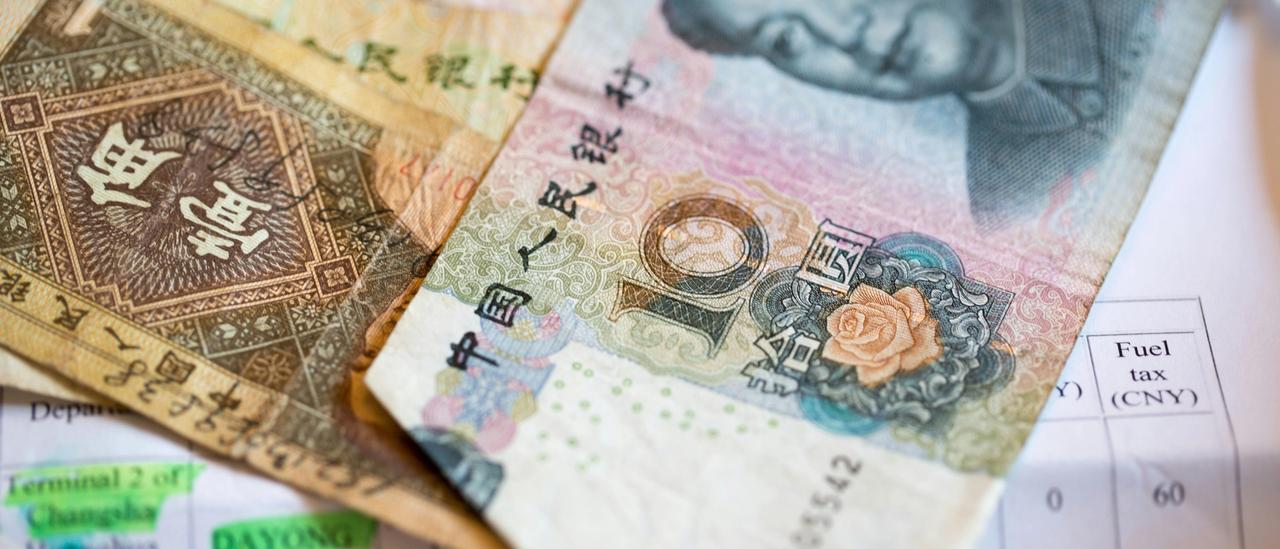
China is effectively a cashless society. Most places don’t refuse cash outright — they simply can’t make change, because so little physical money actually circulates anymore. Exchange only a small amount for emergencies (around ¥300–500 is plenty) and plan to pay for nearly everything with your phone.
Why foreign cards and cash barely work
Visa and Mastercard are refused in most of China. Even US chains like McDonald’s, KFC and Starbucks usually won’t take them. A store may have a card terminal sitting right on the counter and still turn you away, because staff often don’t know how to run it — this has happened firsthand at a KFC that visibly had a machine. Treat foreign cards as a rare fallback for big malls, airports and international hotels, not an everyday method.
Cash has the opposite problem. It’s always legal but awkward: hand over a note and the merchant may have to go hunting for change, which takes time. A few businesses — Luckin Coffee (瑞幸) is the usual example — don’t take cash at all, so you can’t order without a digital method. That’s uncommon, but it’s why you shouldn’t rely on cash alone.

The two ways you’ll actually pay
Once an app is set up, paying is simple. There are two motions: you scan the merchant’s QR code, type in the amount and confirm; or you open your own payment code and the merchant scans it. The only genuinely hard part of the whole system is the initial registration.
Merchant codes vs. personal codes — the trap that makes payments fail
This is the detail almost nobody warns you about, and you will almost certainly run into it. Every QR payment goes to one of two kinds of code, and which one you’re facing decides whether a foreign card works.
A merchant code behaves like a card terminal: once your foreign card is linked, the payment goes through normally. Malls, airports, Starbucks, and anything you order online — food delivery, ride-hailing — all use merchant codes, so those just work.
A personal (individual) collection code behaves like a Venmo transfer: money moves straight from your balance into that person’s account. Night-market stalls, roadside restaurants and small vendors are almost all personal codes. A foreign credit card or overseas debit card generally can’t pay a personal code at all — it only succeeds if you already hold a balance inside the app’s own wallet (or a Chinese bank card, which a tourist won’t have). This is exactly why so many visitors get a failed payment and never learn why.
- Merchant code — malls, airports, chains, food delivery and ride-hailing apps: your linked foreign card works.
- Personal code — stalls, small vendors, roadside eateries: a foreign card usually fails; you need a prepaid balance in the app.
Your options as a foreigner in 2026
Realistically there are six ways to pay, and you should plan to use two or three of them:
- Alipay — the widest option for most overseas visitors.
- WeChat Pay — the other mainstream app, and the one most woven into daily life.
- TenPayGo — a brand-new 2026 app aimed specifically at foreign visitors.
- PayPal — a brand-new 2026 feature, US accounts only, that pays WeChat merchants.
- Visa / Mastercard — only in a handful of places such as big malls and airports.
- Cash — an emergency backup, not a primary method.
How the main apps compare
The four app-based options line up roughly like this:
- None of Alipay, WeChat Pay, TenPayGo or PayPal requires a Chinese bank account.
- Alipay, WeChat Pay and TenPayGo each require installing a Chinese app; PayPal does not.
- Alipay and WeChat Pay cover the most merchants and the most transport and travel bookings, with Alipay the richest for transport.
- PayPal is limited to a first wave of US accounts and depends on the rollout; TenPayGo is open for registration but still in testing.
- For personal transfers, all are restricted for foreign cards — TenPayGo officially supports scanning personal codes but works inconsistently in practice, while PayPal doesn’t support WeChat personal transfers at all.
- None of them is reliable enough to be your only payment method — always carry a backup.

TenPayGo: the new shortcut (2026)
Tencent launched TenPayGo in 2026 specifically to spare foreign visitors the fiddly Alipay and WeChat registration. It’s still in beta but open for registration, and it’s worth trying — the big draw is that it needs no identity verification, which makes it a natural first choice if you’re wary about sharing personal data.
Setup is short: register and log in with your email and verify the account; link a bank card or Apple Pay; then scan to pay. Two things to know: transactions over ¥200 carry a 3% fee, and — unusually — it can scan personal codes, which solves the single biggest headache for tourists. It isn’t the most stable option (some users report it working only intermittently), but it saves a lot of setup hassle and is worth a try.
PayPal for US travelers (2026)
PayPal has opened a beta feature for US users that lets you scan a QR code and pay through WeChat Pay directly. Tencent announced it on May 27, 2026: PayPal World and TenPay Global are interconnected, starting with US PayPal users, who can scan or be scanned within mainland China’s WeChat Pay merchant network.
Who’s eligible
You’ll generally need all of the following — this is not automatic for every US traveler:
- A US-based PayPal account.
- The latest version of the PayPal app.
- An account in good standing.
- A working payment source already added.
- To be physically in mainland China.
- A counterpart that is a supporting Weixin Pay merchant.
- The scan feature actually showing up in your account.
Where PayPal may not work
Don’t assume any WeChat QR code will accept it. PayPal may not work for:
- Personal WeChat collection codes.
- Transfers to friends.
- WeChat red packets.
- Topping up your WeChat Wallet.
- Some payments inside WeChat mini-programs.
- Some transit QR codes.
- Hotel deposits or credit-card pre-authorizations.
- Remote payments to mainland merchants from outside China.
- US PayPal accounts that haven’t received the feature yet.
- Non-US PayPal accounts.

Setting up Alipay and WeChat: what to prepare
These two apps remain the backbone, and it’s worth registering at least one — and linking a card — before you fly, rather than after you land. Gather:
- The latest Alipay and WeChat apps.
- An overseas mobile number that can receive SMS codes.
- A valid passport.
- An international credit or debit card in your own name.
- Your issuing bank’s app.
- A stable internet connection.
- A backup card from a different bank.
Keep the name on your card, the name in your passport, and your identity-verification details as consistent as possible — mismatches are a common reason verification stalls.
Set up Alipay as a foreigner
- Download the mainland Alipay app — not AlipayHK.
- Select your country or region code.
- Register with your overseas mobile number.
- Enter the SMS verification code.
- Go to Me → Bank Cards (Cards) → Add Card.
- Enter or scan your international card details.
- Open Account and Security → Identity Information.
- Choose Passport as the document type.
- Upload your passport information page and complete facial verification if requested.
- Set a six-digit payment password.
- After you arrive in China, test a small merchant payment.
Set up WeChat Pay as a foreigner
- Download or update WeChat to the latest version.
- Register with your overseas phone number.
- Open Me → Services → Wallet.
- If Wallet is hidden, go to Settings → General → Tools and enable Weixin Pay.
- Tap Cards → Add a Card.
- Accept the Weixin Pay service agreement.
- Enter your card and billing information.
- Choose Passport and complete identity verification if prompted.
- Approve the request in your issuing bank’s app, or enter the OTP.
- Set a payment password and activate your payment code.
WeChat sometimes asks for friend-assisted verification as a security step, but that isn’t required for every overseas user.
Bring at least two methods
Set up at least two payment methods and keep a little cash on you. Cash is slow when change is scarce, but it always works eventually; a digital app covers the personal-code stalls that cards can’t. Two apps plus a few hundred yuan is the combination that keeps you moving.