
| What | What it is | When locals eat it | Heat |
|---|---|---|---|
| Hot pot (火锅) | Meat and vegetables you cook yourself in a boiling chili broth | Dinner | Your choice, mild to very hot |
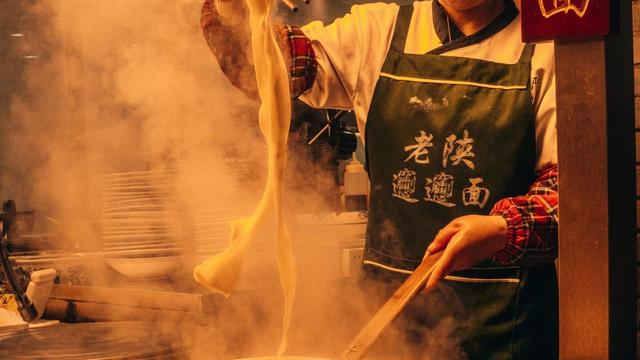
| Xiaomian (小面) | A small bowl of noodles | Breakfast and lunch | Medium, adjustable |
| Jianghu cai (江湖菜) | Chongqing's own version of Sichuan cooking, on big plates | Lunch or dinner | Hot |
| Douhua fan (豆花饭) | Soft tofu, dipping sauce, rice and a few stir-fries | Lunch only | You control it with the sauce |
| Street snacks | Sold from carts, no shop names | Any time | Mixed, several are sweet |
| Night markets | BBQ skewers and snacks in residential areas | After dark | Mixed |
Is Chongqing food really that spicy?
Less than you think. Chongqing is known for heat, but it is not as brutal as its reputation. You can ask for mild (微辣, wēi là) almost everywhere, and there is always rice on the table.
People often lump Chongqing food together with Chengdu's. They are the same family with a different temper. Chongqing food is hotter, the portions are bigger, and the plates are louder.
Chongqing hot pot
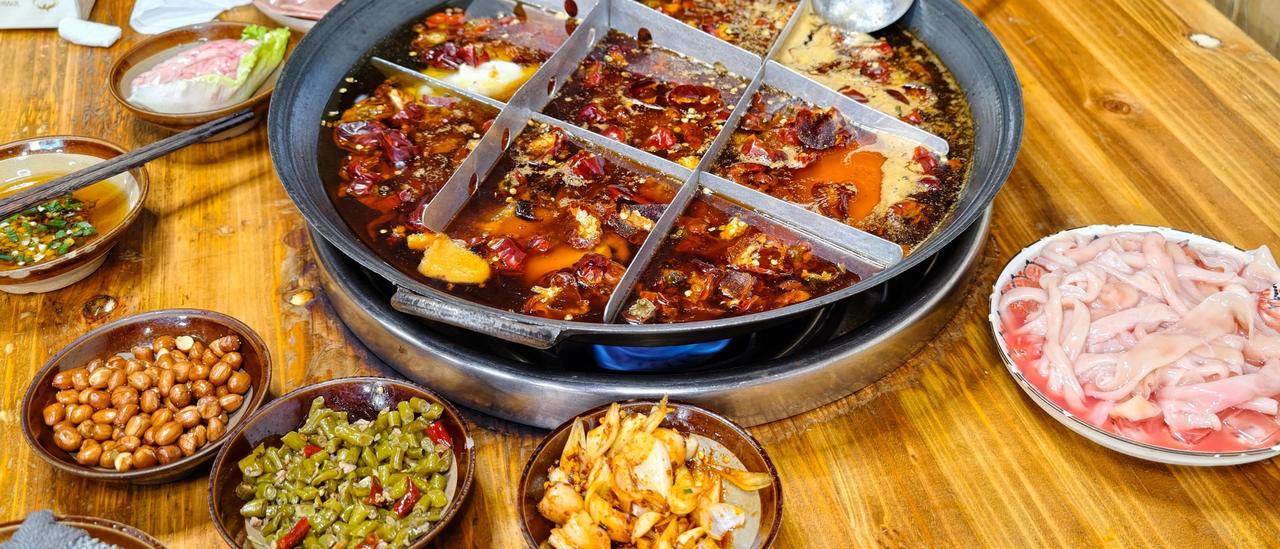
Hot pot is the first thing to eat here. It is the city's signature, known all over China and well beyond it.
The broth. You can order it mild. You cannot order a red broth with no chili, because that pot does not exist in Chongqing. If you are nervous, ask for a yuanyang pot (鸳鸯锅): clear broth on one side, red on the other. No pressure that way.
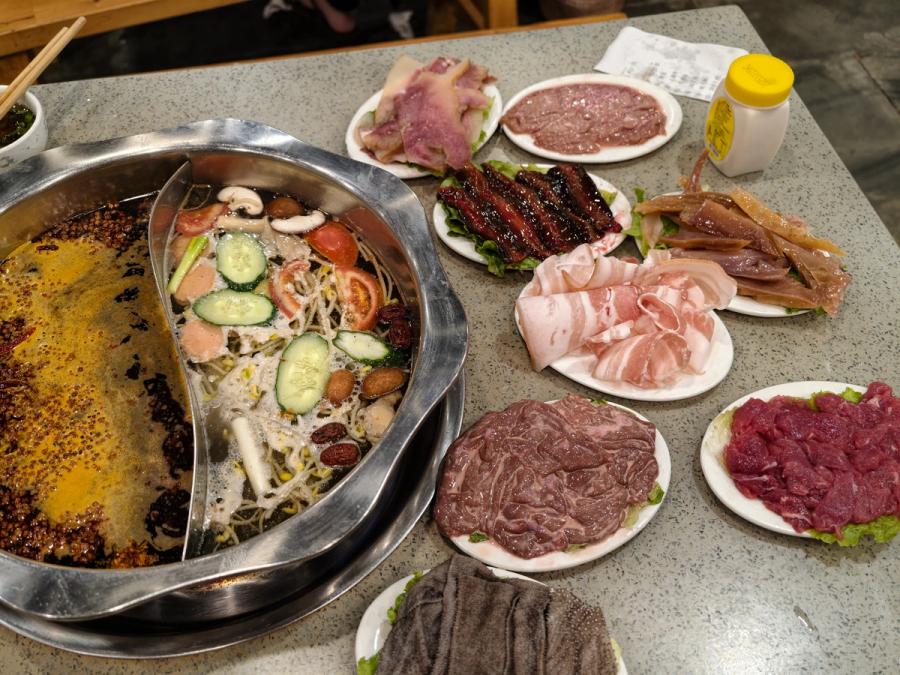
What to order. Locals always get tripe (毛肚), duck intestine (鸭肠), aorta (黄喉), kidney slices (腰花) and cilantro meatballs (香菜圆子). That is our taste, not a rule. If you would rather eat beef, order beef.
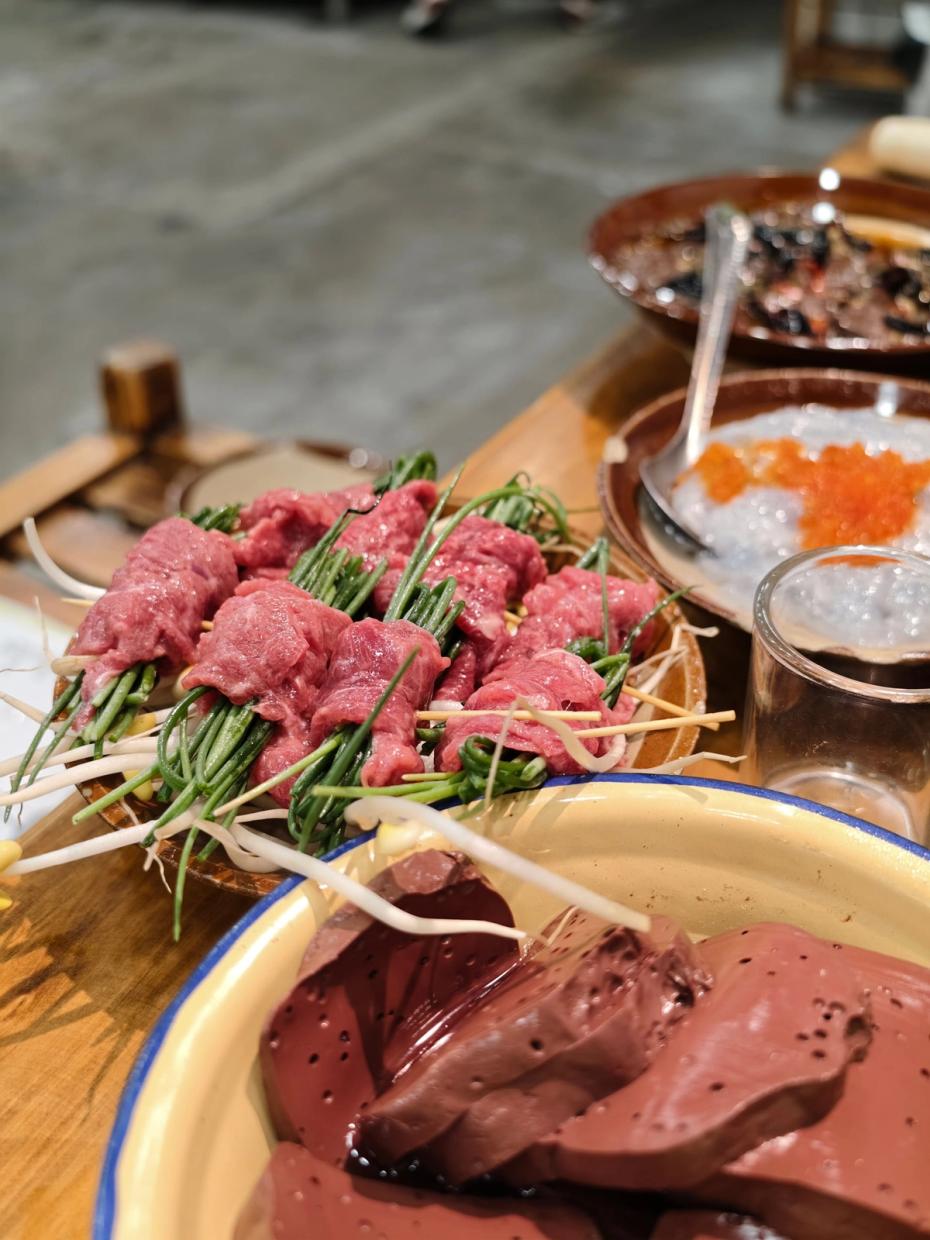
The dipping sauce. The local version is minced garlic and sesame oil. If you want the real thing, add nothing else. A little scallion or cilantro is fine if you like it. Halfway through the meal, add a splash of vinegar. You will be surprised.
If it gets too hot. Ask the waiter for a cup of hot water and rinse your food in it before eating.
What to drink. Soy milk. Every hot pot restaurant has it. Say "wei yi" (唯怡) and the waiter will know.
Where to eat hot pot
Chongqing has more than ten thousand hot pot restaurants, so I am not going to give you a list. Stay away from the tourist sights and you will almost never go wrong. Remember this: the fancier the place and the bigger the sign, the more likely it was opened for out-of-towners. It may not be bad. It just is not real Chongqing hot pot.
If you want convenience, you can eat in Jiefangbei. Just know that the hot pot there is not as good as what you get in the residential neighbourhoods.
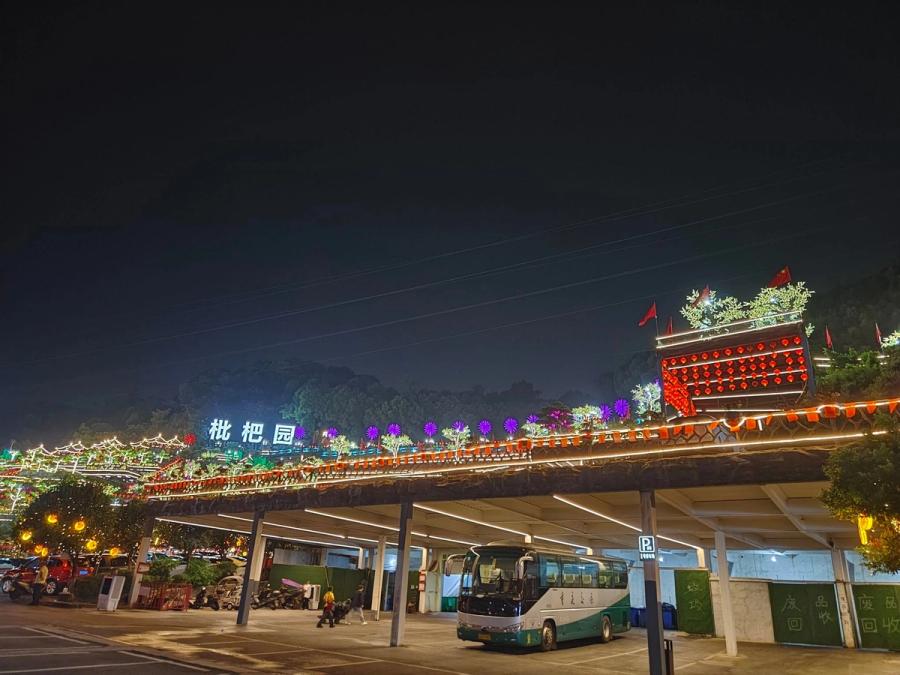
One place works for visitors and locals alike: Pipa Yuan on Nanshan mountain. You see the whole city from your table, the food is good, and it is not a tourist trap. Locals take their guests there. Take a taxi, and copy this into Amap:
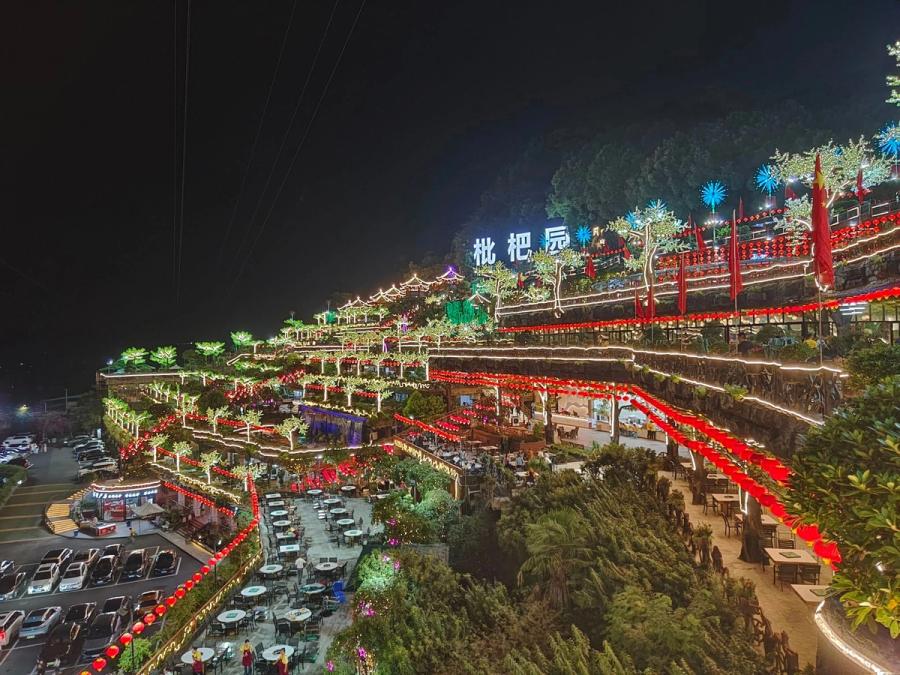
枇杷园食为鲜火锅店(南山总店)
Chongqing xiaomian
Xiaomian is as famous as hot pot now. Plenty of countries have shops that sell nothing else. In Chongqing the noodle shops are everywhere. It is neighbourhood food.
There are three styles worth trying. They taste very different, so spread them over a few meals.
- Traditional xiaomian (麻辣小面): spicy and numbing, no meat.
- Wanza mian (豌杂面): mixed dry, with soft peas and minced pork.
- Beef noodles (牛肉面).
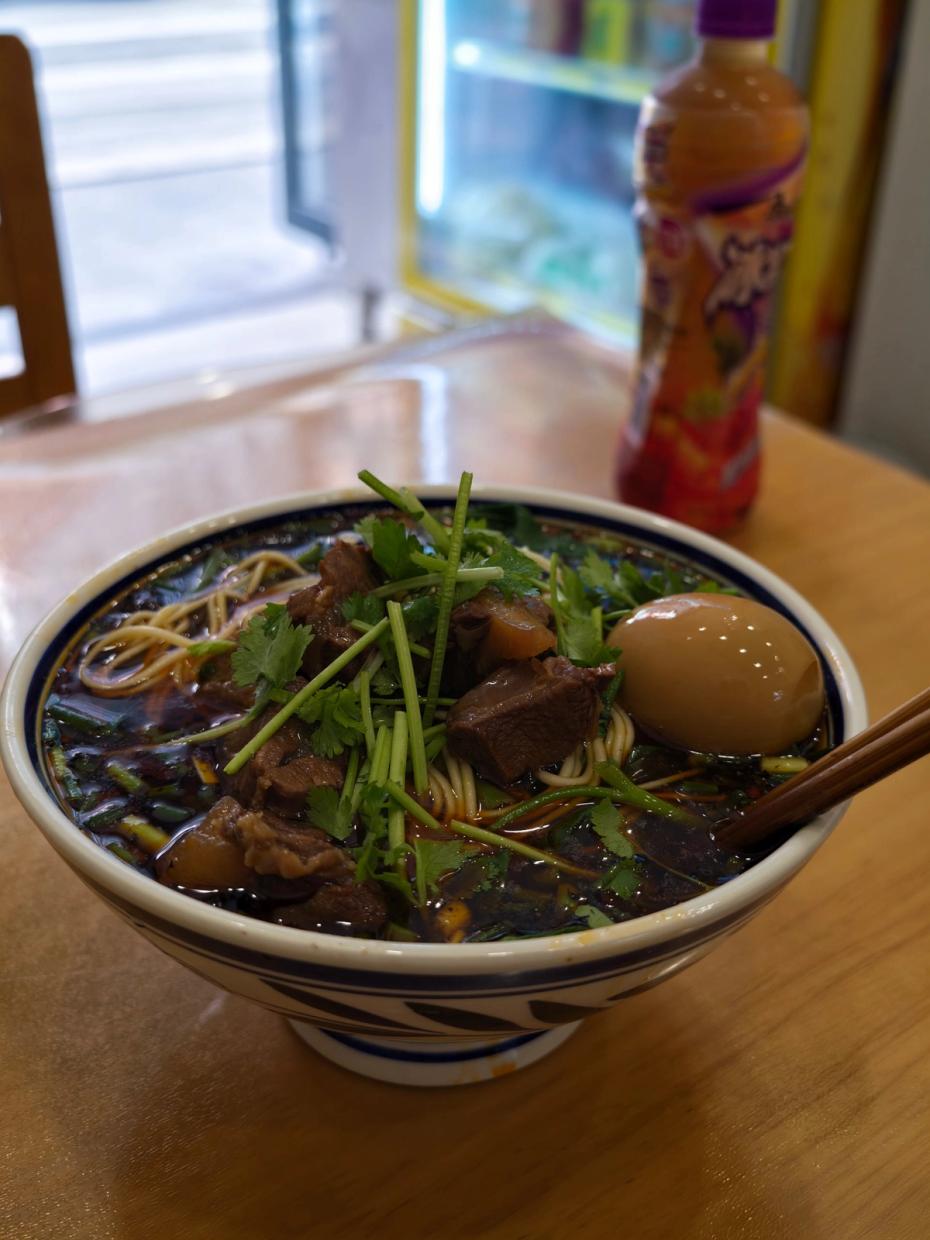
A standard bowl is 二两 (èr liǎng). Order 一两 for a small one or 三两 if you are hungry.
Eat xiaomian for breakfast or lunch. The shops are open at night too, but locals do not go then. Dinner is for hot pot or jianghu cai.
Which noodle shop?
Chongqing has a Top 50 xiaomian ranking. Honestly, I do not think number one is better than number fifty. Every shop has its own thing, and the best bowl I have had is not on the list at all. New shops open all the time and many are not covered.
But if you are a traveller with no idea where to start, pick from it and you will not have a bad bowl. These are the top ten for traditional xiaomian. Copy a name into Amap and see which one is closest to you.
- 逸佳面庄
- 天宝面
- 芳芳面馆
- 张记奔吃小面
- 小唐面
- 江北区李渝面馆
- 周小波重庆小面
- 得口福重庆小面
- 渝香极晓月老面馆
- 山城幺妹重庆小面
For beef noodles, go to Yanjing Beef Noodles (眼镜牛肉面). It is very well known, has been around for decades, and sells beef noodles and nothing else.
重庆市渝中区南纪门街道解放西路171号
Jianghu cai
Jianghu cai is Chongqing's version of Sichuan food. Sichuan cuisine already blends cooking from all over the region, and jianghu cai is the local branch of it. Same family, but hotter, with bigger portions and more going on in the plate.
Laziji is the best example. The plate looks like nothing but dried chilies, with the chicken buried somewhere inside. It is a lot like the people here.
What to order:
- Laziji (辣子鸡): fried chicken in a pile of dried chilies. Eat the chicken, leave the chilies.
- Maoxuewang (毛血旺): duck blood, tripe and more in a red chili broth.
- Jianjiao tu (尖椒兔): rabbit with green chilies.
- Yao gan he chao (腰肝合炒): kidney and liver, stir-fried together.
And fish:
- Sanhe yu (三合鱼): fish and bullfrog in one pot. It is famous here, but plenty of people do not eat frog, me included.
- Suancai yu (酸菜鱼): fish with pickled greens. Order this if frog is not for you.
- Wanzhou grilled fish (万州烤鱼): also excellent.
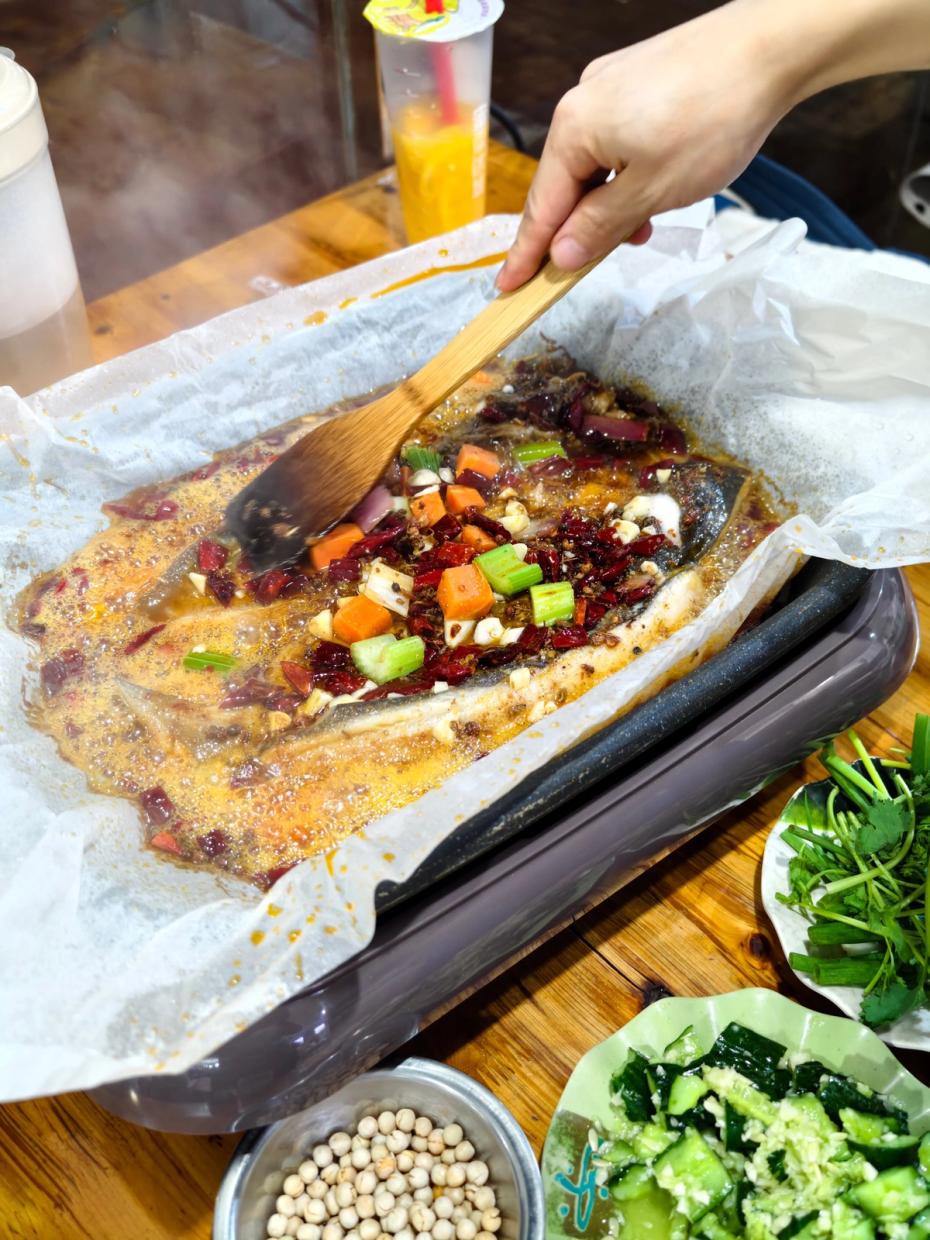
Portions are big. Order less than you think you need and add more later.
Douhua fan: the one most blogs skip
Most guides do not mention douhua fan, but it is part of everyday life for people who grew up here.
It is not a special dish. It is a combination: Chongqing douhua (soft tofu), a dipping sauce, a bowl of rice, and a few ordinary stir-fries. That is all of it. Nothing mysterious. You should still try it, because the douhua here is different.
How to eat it: pick up a piece of douhua with your chopsticks, dip it in the sauce, and put it on your rice. Eat it with a stir-fry on the side. Good choices:
- Twice-cooked pork (回锅肉)
- Kidney and liver (腰肝合炒)
- Shredded potato (土豆丝). It looks like nothing, and I strongly recommend it.
Douhua fan is sold almost only at lunch.
The shop I recommend is Renhe Wuming Douhua (人和无名豆花). Nearly everyone in Chongqing knows it. Both the douhua and the stir-fries have a good name locally. It has opened a number of branches, but I think the original is the best.
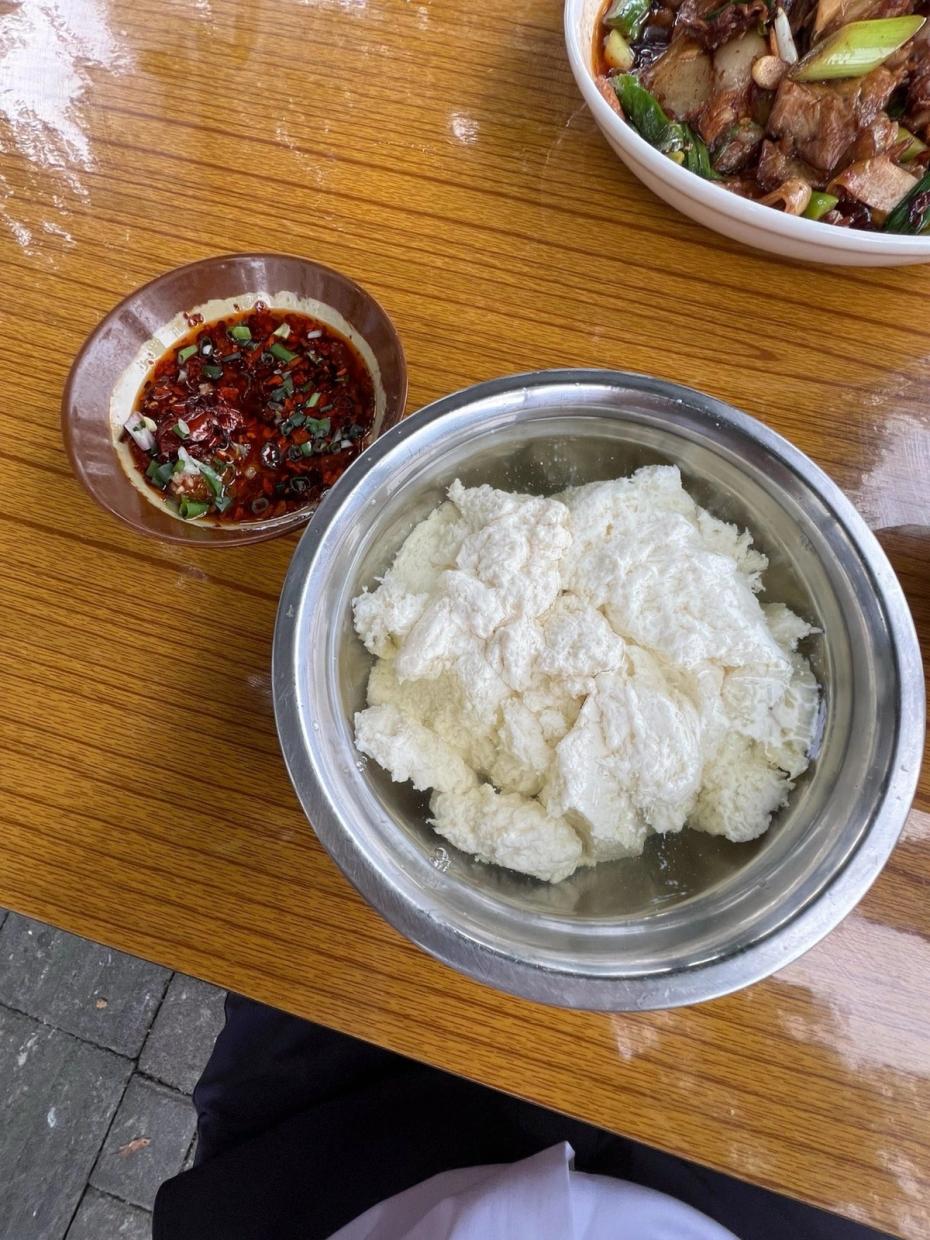
It is some way from the city centre. Parking is hard and public transport is awkward, so take a taxi. Expect a queue at lunch.
重庆市两江新区人和万年路420号1幢附17号
Chongqing street snacks
The famous snacks here do not come from shops. They come from carts and stalls on the street, so there are no names to look up. When you see one, buy it.
- Suanla fen (酸辣粉): sweet potato noodles in a sour, spicy soup.
- Liang mian (凉面): cold noodles tossed in chili oil.
- Doufunao (豆腐脑): soft tofu in a cup, eaten on the go. This is not douhua fan. That one is a sit-down lunch with rice. This one is a snack.
- Bingfen (冰粉): clear ice jelly with brown sugar syrup. Not spicy, and very good after hot pot.
- Liangxia (凉虾): the name means "cold shrimp", but it is made of rice. Small shrimp-shaped pieces in sweet brown sugar water.
- Xiao tangyuan (小汤圆): small glutinous rice balls in a sweet soup.
Night markets
Chongqing does not really do the single "food street" kind of night market. Those are mostly built for tourists, and the food is not good. The real ones are scattered through residential neighbourhoods. Go for BBQ skewers (烧烤) and suanla fen.
These are places I have been to myself. Most are a few metro stops from Jiefangbei, and you get to see how locals spend an evening.
- Chongqing Technology and Business University station (重庆工商大学): step out of the metro and you are there. Nan'an district has a lot of good food to begin with. There are many students, it is busy at night, and everyone around you is local.
- Guanyinqiao Jiujie (观音桥九街): it started as a bar street, but there is plenty to eat.
- Liujia Wharf (鎏嘉码头): night views and food, with bars nearby.
- Changjiahui (长嘉汇): night market, BBQ, river views, and a drone show on some nights. Hard to beat. If you want the show, check that it is on before you go.
- Shapingba Three Gorges Square (沙坪坝三峡广场): further out than the others.
Where to eat in Chongqing
My advice: do not plan your meals around the Jiefangbei tourist area or Hongyadong. The food is less authentic and it costs more. Go to one of these instead.
- Guanyinqiao (观音桥). This is where Chongqing people shop, and local food does well here. Trust me, a restaurant that is not good does not last long in Guanyinqiao. The very best places in the city are not here, but you will almost never have a bad meal and you will not be overcharged. Take the metro to Guanyinqiao station.
- Daping, around Times Paradise Walk (大坪时代天街). An older part of town where locals gather. Mostly hot pot.
- Nanping, around Wanda Plaza (南坪万达广场). Nanping is one of the old districts, and I think the best food in Chongqing is here.
How locals choose a restaurant
I have named very few restaurants in this guide, only a view restaurant and a couple of classics. There is too much good food to list. Locals do not use lists anyway. We open Dianping (大众点评) and choose from there.
Ordering and paying
Most places have no English menu, and many ask you to scan a QR code on the table to order. Point your phone's translate camera at the menu and you will manage. Pay with Alipay or WeChat Pay. Both accept foreign cards. There is no tipping.
A few words that help:
| Chinese | Say it | Meaning |
|---|---|---|
| 微辣 | wēi là | Mild |
| 不要辣 | bú yào là | No chili. Works for noodles and stir-fries, not for red hot pot broth |
| 鸳鸯锅 | yuānyāng guō | Split pot, half clear and half red |
| 二两 | èr liǎng | A standard bowl of noodles |
| 米饭 | mǐ fàn | Rice |
| 唯怡 | wéi yí | Soy milk |
If you do not eat spicy food. Take the clear side of a yuanyang pot, ask for 不要辣 with noodles and stir-fries, and eat the sweet snacks.
If you are vegetarian. It is harder. Red hot pot broth is made with beef fat. Douhua, shredded potato and vegetable stir-fries are your safest orders.
If you are eating alone. Noodles, douhua fan and street snacks are easy. Hot pot and jianghu cai are made for a group.
What it costs
Eating in Chongqing is cheap.
- Street snacks: under ¥15, about $1 to $2.
- Hot pot: around ¥80 a person, $10 to $15, and you eat very well for that.
- Jianghu cai: about the same as hot pot.
One day of eating in Chongqing
- Breakfast: a bowl of xiaomian at a shop near where you are staying.
- Lunch: douhua fan.
- Dinner: hot pot. On your second night, jianghu cai.
- Late: a night market for BBQ skewers, then bingfen to cool down.