Why travel China by train?
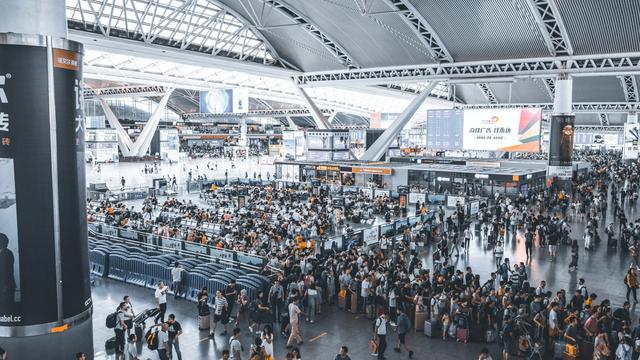
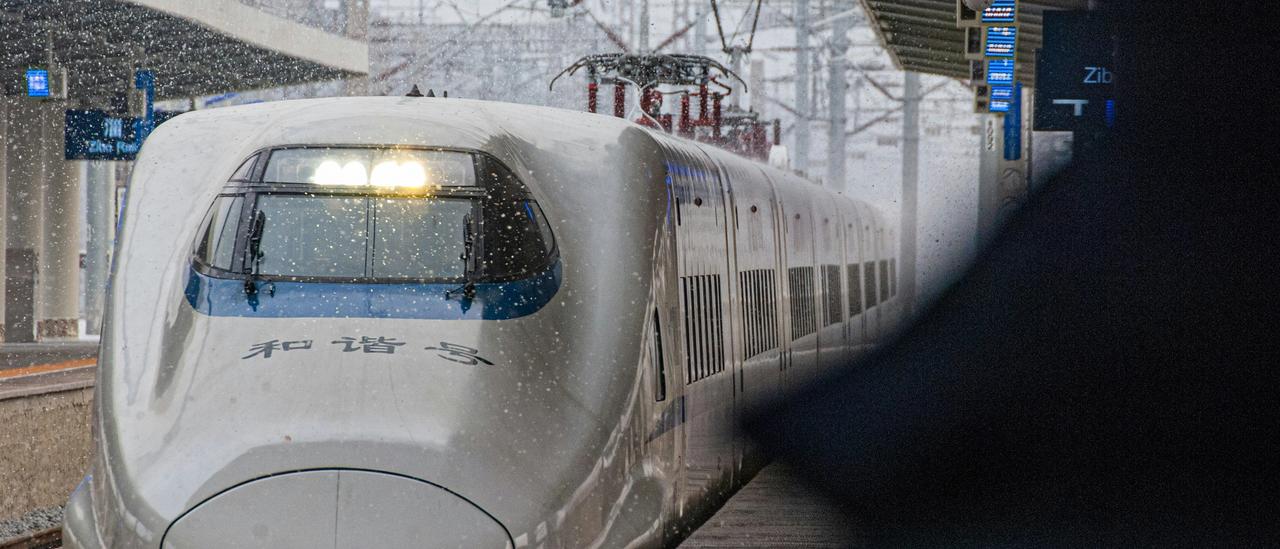
Trains are often the most practical way to travel between Chinese cities. High-speed rail connects many city pairs quickly, while conventional trains reach places with limited or inconvenient flights. Rail stations may also be easier to reach than airports—but not always, because some newer stations are far from the historic city center.
Do not assume the train is automatically cheaper or faster than flying. Compare the full journey: travel to the station or airport, security time, waiting time, baggage needs and onward transport after arrival.
The most common train prefixes are:
- G: the fastest high-speed services on major routes.
- D: high-speed or express EMU services, including some overnight trains.
- C: intercity services.
- Z, T and K: conventional long-distance trains, often with hard and soft sleepers.
Check the exact railway station before booking
A city name is not a station name. Large Chinese cities commonly have several passenger stations, and choosing the wrong one can add an hour or more of road or metro travel.
For example, Hangzhou East, Hangzhou South and Hangzhou West are different stations. In booking and map apps, Hangzhou East may appear as any of the following:
- Hangzhou East
- Hangzhou Dong
- Hangzhoudong
- 杭州东站
These names refer to the same station. “Dong” is the pinyin spelling of 东, meaning east.
| Chinese | Pinyin | English |
|---|---|---|
| 东 | Dong | East |
| 西 | Xi | West |
| 南 | Nan | South |
| 北 | Bei | North |
The direction is part of the official station name. Beijing South is not Beijing West, and Suzhou is not Suzhou North. Some stations use district or landmark names instead of directions—Shanghai Hongqiao is the obvious example—so never search only for “Shanghai train station.”
Before paying, copy the complete departure and arrival station names from 12306 or Trip.com into a map app that works reliably in mainland China. Compare the Chinese characters as well as the English name, locate the station, and calculate travel time from your hotel. Repeat the check after the ticket is issued and again before leaving for the station.
What are 12306 and Trip.com?
Railway 12306 is China Railway’s official passenger ticketing platform. Trip.com is a third-party travel platform that submits train-ticket bookings for its customers. Both can produce valid railway e-tickets linked to a foreign passport, but they differ in cost, setup and after-sales handling.
| Railway 12306 | Trip.com | |
|---|---|---|
| Platform | Official China Railway platform | Third-party travel platform |
| Best for | Direct control and multiple train journeys | A familiar multilingual booking flow |
| Price | Railway fare; no third-party booking fee | Railway fare plus any fee shown at checkout |
| Passport setup | 12306 account and identity verification | Passport details entered in the Trip.com booking |
| Advance requests | Only within the railway sales window | Can accept reservations before tickets go on sale |
| Waitlist | Official 12306 waitlist | Pre-booking or ticket-search services shown in the order |
| Support | 12306 website, app, hotline and station counters | Trip.com customer service and order support |
| Changes/refunds | Direct under railway rules | Railway rules plus Trip.com terms and processing limits |
12306 is usually the better choice if you are booking several journeys, want to avoid accumulating third-party fees, or already have a verified account. According to Railway 12306's English registration instructions, foreign travelers can register with a passport and email address.
Trip.com may be worth the extra cost if you prefer its interface, international checkout and English-language customer service. The exact fee can vary by market, currency, order and selected service, so judge it from the final payment page rather than a figure quoted in another travel blog. Trip.com's China train-ticket policy says its booking fee is non-refundable once applicable.
A staffed station ticket counter is a useful fallback if online identity verification fails. It is a poor main strategy for a popular route on a busy date, because the train you want may sell out before you reach China.
When do China train tickets go on sale?
China Railway's advance-sales guidance says tickets are normally sold 15 days in advance, including the travel date. If you travel on the 15th, for example, the first sale date is normally the 1st—not 15 full days before departure. Temporary or specially added trains may use a shorter window.
Tickets do not all go on sale at midnight. Each departure station has a release time, and the railway may adjust it. Check the current release time for the departure station in Railway 12306's official on-sale time inquiry.
A Trip.com reservation is not a ticket
Trip.com can accept a reservation when the travel date is more than 15 days away, but it cannot issue the railway ticket before sales open. Trip.com's reservation policy says it will attempt to book when tickets for the date go on sale; if the ticket is still not issued two hours before departure, the reservation is automatically canceled.
The exact wording in the app may change, but read common order states like this:
| Order state | What it means |
|---|---|
| Reservation submitted | Trip.com has your request; a railway seat may not yet be on sale |
| Searching or ticketing | The platform is attempting to obtain the ticket |
| Tickets issued | The railway ticket has been obtained |
| Failed or canceled | No ticket was obtained; choose another option |
Do not travel to the station with only “reservation submitted.” You need an issued ticket with a train number, travel date and passenger attached to it.
What if the train is sold out?
On 12306, submit an official waitlist request and include acceptable alternative trains and seat classes. Checking another station in the same city can also help, provided you understand where that station is. Other options are an earlier or later departure, a conventional train, or a different travel date.
Trip.com does not have a secret supply of seats before China Railway releases them. Its value is convenience and automated submission, not privileged access to inventory. A displayed success estimate is not a guarantee.
How foreigners book with a passport
China uses real-name railway ticketing. The passenger name and passport number in the order must identify the person who travels.
Booking on Railway 12306
The simplest foreign-passport flow is:
Open the official Railway 12306 English website or Railway 12306 app.
Register with your passport details and email address. A mainland Chinese phone number is not required by the English registration form.
Complete identity verification. The system may verify the information automatically or ask for a clear image of the passport information page.
Add companions under “My Passengers” if one account will book for the group.
Search the exact departure and arrival stations.
Select the train and class, submit seat preferences, and pay.
Check the order for the correct name, passport number, stations, date and train.
The Chinese government's official guide for foreign residents and visitors confirms that foreign travelers can verify a passport online, upload the passport information page for manual review, or complete verification at a station ticket office. It also states that 12306 supports Chinese or foreign bank cards and mobile payments, although the methods actually available can depend on the checkout flow.
Do not leave verification until the minute tickets are released. There is no reliable universal approval time. If a passport remains pending, check the number, nationality, expiry date and photo quality; then try the website instead of the app or take the original passport to a station counter.
How should a foreign name be entered?
Use the English name printed on the passport, in the order requested by the form. Do not replace it with a nickname or casually remove a middle name. Railway 12306's registration rules say foreign-passport users should enter the English name in passport order. For names exceeding the system's 30-character limit, the rules instruct users to enter the first 30 consecutive characters and omit spaces.
If the form cannot represent a hyphen, accent or other feature, follow the current on-screen passport-name instructions. Do not invent a workaround on a time-sensitive journey; request platform support or station verification.
Booking for a family or group
Every traveler does not need a separate 12306 account. Railway 12306's English passenger guidance says a registered user can add other people under “My Passengers” and buy for them after their identity status is accepted. Each traveler still needs accurate passport information.
On Trip.com, add all travelers to the same order when possible. This improves the chance of adjacent seats, but does not guarantee them.
How do you know the ticket is valid?
Payment alone is not the test—especially for a Trip.com advance reservation. Confirm that the order says the ticket has been issued and shows:
- the passenger’s name;
- the correct passport number;
- the complete departure and arrival stations;
- the departure date and time;
- the train number;
- the coach and seat or berth, once assigned.
China train seats explained
For most daytime high-speed trips, second class is the practical default. First class has fewer seats per row and more personal space. Business class is the premium option and is not available on every train. Conventional overnight trains may sell hard or soft sleepers instead of high-speed seat classes.
High-speed seat letters
| Class | Typical layout | Window | Aisle | Middle |
|---|---|---|---|---|
| Second class | 3+2: ABC + DF | A, F | C, D | B |
| First class | 2+2: AC + DF | A, F | C, D | None |
| Business class | 2+1 or 1+1 | Usually A, F | Usually C | None |
There is no E seat. The lettering preserves A and F as window positions and C and D as aisle positions. The Beijing municipal government's published high-speed rail guide confirms these common layouts.
Seat selection is normally a preference, not a promise of a specific numbered seat, travel direction or unobstructed window. Train type and remaining inventory control the final allocation.
How can a group sit together?
Book all travelers in one order and select compatible adjacent preferences. Booking early improves the chance, but the system may still split the group when few seats remain.
If you are separated, do not automatically cancel and rebook: the replacement order may be split again, and a refund fee may apply. After boarding, politely ask whether another passenger is willing to exchange an equivalent seat. Nobody is required to move, so obtain consent before sitting down. Ask the conductor for help if needed.
How to enter the station and board
Bring the original passport used in the booking. A booking screenshot, itinerary sheet or receipt can help staff locate an order, but it does not replace the identity document used for the e-ticket. Railway 12306's English passenger guidance specifically states that itinerary sheets are not tickets.
For a first journey through an unfamiliar major station, arriving 45–60 minutes before departure is a comfortable practical target. This is advice, not a national rule. A familiar small station on a quiet day may require less time; a holiday crowd may require more. Railway ticket checks close before departure, and the exact cutoff is set by the station.
The usual sequence is:
Confirm that you are at the complete station name on the ticket.
Present or scan the passport at the entrance.
Put all bags through the security scanner.
Find the waiting area and check-in gate shown for your train.
Pass the boarding gate when check-in opens.
Follow platform signs to the correct coach.
Automatic passport gate or manual channel?
There is no single answer for every station. The Chinese government's official guide for foreign travelers says passengers may enter and exit through automatic or manual ticket-check gates using the original document used to buy the ticket.
If staff directs you to a passport-enabled automatic gate, try it. If the machine does not read the passport promptly, use the staffed lane, often marked 人工通道 (manual channel). A failed scan does not necessarily mean the ticket is invalid.
You may need the passport again during an onboard check and when exiting at the destination, so keep it accessible rather than buried in a suitcase.
On the train and changing trains
The coach number is displayed outside or beside the carriage door. Inside, locate the row and seat letter shown in the order. Put smaller bags on the overhead rack or beneath the seat; use the larger luggage area at the end of the coach when available. Keep valuables with you.
Toilets, hot-water dispensers, food service and power outlets are common but vary by train and carriage. Do not plan around a guaranteed meal or socket. Smoking is prohibited throughout high-speed EMU trains.
Stops can be short. Watch the onboard display or announcements and prepare to leave before your destination. Keep the passport ready for the exit gate.
For a transfer, follow signs for 便捷换乘 or ask platform staff whether you can transfer inside the station. Some journeys require you to exit and re-enter through security. Leave a generous connection at a station you do not know; separate tickets should not be treated as an automatically protected connection.
Refunds, changes and missed trains
Standard China Railway refund fees
| Time you request the refund | Railway refund fee |
|---|---|
| At least 8 days before departure | 0% |
| At least 48 hours but less than 8 days | 5% |
| At least 24 but less than 48 hours | 10% |
| Less than 24 hours | 20% |
According to Railway 12306's refund rules, the minimum refund fee is generally CNY 2. Special rules can apply after certain changes or during designated peak periods. Refunds for online payments return to the original payment method.
The 2026 accidental-purchase rule
For eligible tickets bought through official 12306 channels, a registered user can cancel one accidentally purchased order per day without a refund fee when both conditions are met:
- the refund is submitted within 30 minutes of payment; and
- the train departs at least four hours later.
Railway 12306's accidental-purchase policy applies to eligible travel dates from February 2, 2026. It excludes categories including changed, pre-ordered and waitlisted tickets.
Changing a ticket
Under Railway 12306's current change rules, a ticket can normally be changed once, subject to availability. Changes made more than 48 hours before departure are generally free within the sales window. When less than 48 hours remains, moving the ticket to a later date can trigger a fee: 5% when 24–48 hours remains and 15% when less than 24 hours remains, calculated on the lower fare. After departure, changing to another train on the same date is free if seats are available; changing to the next day or later costs 40% of the lower fare.
If the replacement ticket costs more, you must pay the difference under the applicable payment flow. If it costs less, the difference is returned after any applicable deduction.
What if you miss the train?
An unused ticket normally cannot be refunded after departure. Act immediately: before the end of the original travel date, try to change it to another same-day train with available seats. A move to a later date may be possible but carries the 40% fee described above. A ticket changed after departure cannot later be refunded.
How Trip.com refunds differ
The underlying railway refund percentages are the same, but Trip.com's train-ticket policy says its booking fee is non-refundable, and third-party processing can have earlier request cutoffs or an additional manual handling fee. Start the request in the Trip.com order unless the app directs you to a station counter. Trip.com says online change-related refunds generally return to the original payment method in 7–10 working days, but the issuing bank controls the final posting time.
If China Railway cancels the train or cannot carry you as ticketed for railway reasons, ask for official re-accommodation or a refund. Railway-caused disruption should not be treated as a voluntary passenger cancellation.
Children, luggage and power banks
China Railway bases child tickets on age:
- One child under 6 may travel free with each ticketed adult if the child does not occupy a separate seat. The child must still be declared in the booking.
- Children aged 6 to under 14 need a child-discount ticket.
- Travelers aged 14 or older need a full-price ticket.
Under Railway 12306's child-ticket rules, the child's ticket must use accepted identity information and match the accompanying adult's train, date and class.
Railway 12306's published luggage rules set the standard free carry-on allowance at 20 kg for most passengers and 10 kg for children. Each item may weigh up to 20 kg; the combined length, width and height may not exceed 130 cm on EMU/high-speed trains. Travelers are responsible for storing and watching their own bags.
China Railway's published restricted-items rules cover knives, flammable liquids, sprays and other hazardous items. A power bank or spare lithium battery must have a clear capacity label, and each unit must not exceed 100Wh.
Troubleshooting
| Problem | Best first action |
|---|---|
| Passport verification is pending | Recheck the name, number, expiry date and photo; try the website; use a station counter if necessary |
| Passport number is already registered | Use account recovery or ask 12306/station staff to resolve the existing account |
| A foreign card fails | Check the bank’s fraud alert, then try another supported payment method or platform |
| Trip.com still shows a reservation | Check whether sales have opened; add acceptable alternatives; do not treat it as an issued ticket |
| The automatic gate rejects the passport | Move to the staffed manual channel with the passport and order number |
| Travelers are not seated together | Politely request an equivalent swap after boarding; do not assume a new order will solve it |
| You cannot find the station | Copy the full station name and Chinese characters from the issued order into the map |
| You arrived at the wrong station | Tell staff immediately and check whether there is time to reach the correct station or change the ticket |
| The passport was renewed after booking | Contact the booking platform before travel; passport/ID details generally cannot be changed as a simple ticket amendment |
| The passport is lost | Report the loss and obtain an accepted loss report or temporary travel document; contact the station before departure |
| A refund has not arrived | Check the platform’s processing status, then contact the card issuer with the refund reference |
Sources and verification
- Railway 12306 and China Railway: English account registration, foreign-passport identity verification, passenger management, ticket sale times, advance-sales notices, e-ticket use, itinerary slips, ticket changes, refunds, accidental-purchase refunds, child tickets, luggage allowances and restricted items.
- Trip.com: China train-ticket booking terms, advance reservation handling, booking fees, changes, cancellations and refund-processing guidance.
- The State Council of the People's Republic of China: official guidance for foreign visitors using railway services, including passport verification, payment methods and automatic or manual ticket gates.
- Beijing Municipal People's Government: published guidance on China high-speed rail seat classes, layouts and seat letters.
Information was checked against the above sources on August 2, 2026. Railway policies, platform features, station procedures, fees and schedules may change. Recheck time-sensitive details in the official booking platform before paying or traveling.